Gender and Romance in Chaucer's Canterbury Tales
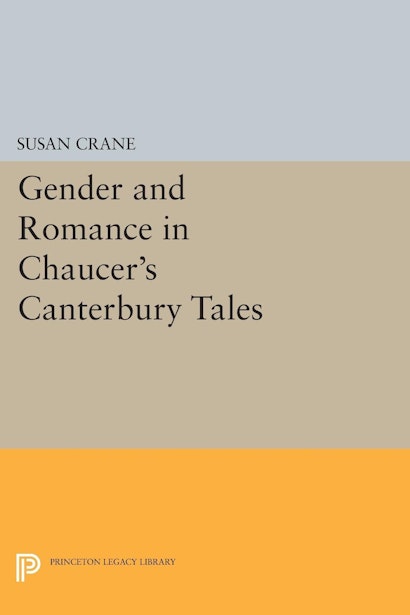
Hardcover
- Price:
- $99.95/£84.00
- ISBN:
- Published:
- Apr 19, 2016
- Copyright:
- 1994
- Pages:
- 242
- Size:
- 6 x 9 in.
Paperback
ebook
In this fresh look at Chaucer’s relation to English and French romances of the late Middle Ages, Crane shows that Chaucer’s depictions of masculinity and femininity constitute an extensive and sympathetic response to the genre. For Chaucer, she proposes, gender is the defining concern of romance. As the foundational narratives of courtship, romances participate in the late medieval elaboration of new meanings around heterosexual identity. Crane draws on feminist and genre theory to argue that Chaucer’s profound interest in the cultural construction of masculinity and femininity arises in large part from his experience of romance.
In depicting the maturation of young women and men, romances stage an ideology of identity that is based in gender difference. Less obviously gendered concerns of romance—social hierarchy, magic, and adventure—are also involved in expressing femininity and masculinity. The genders prove to be not simply binary opposites but overlapping and shifting coreferents. Precarious social standing can carry a feminine taint; women’s adventures recall but also contradict those of men. This lively study reveals that Chaucer’s redeployments of romance are particularly sensitive to the crucial place gender holds in the genre.
Originally published in 1994.
The Princeton Legacy Library uses the latest print-on-demand technology to again make available previously out-of-print books from the distinguished backlist of Princeton University Press. These editions preserve the original texts of these important books while presenting them in durable paperback and hardcover editions. The goal of the Princeton Legacy Library is to vastly increase access to the rich scholarly heritage found in the thousands of books published by Princeton University Press since its founding in 1905.