Knocking on the Door: The Federal Government's Attempt to Desegregate the Suburbs
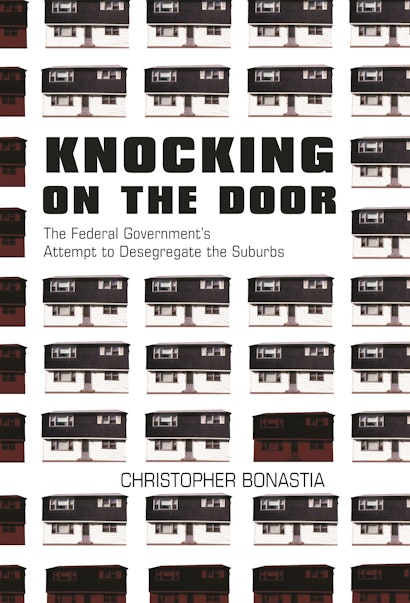
Paperback
- Price:
- $42.00/£35.00
- ISBN:
- Published:
- Feb 24, 2008
- Copyright:
- 2006
- Pages:
- 256
- Size:
- 6 x 9.25 in.
- Main_subject:
- History
ebook
Knocking on the Door is the first book-length work to analyze federal involvement in residential segregation from Reconstruction to the present. Providing a particularly detailed analysis of the period 1968 to 1973, the book examines how the U.S. Department of Housing and Urban Development (HUD) attempted to forge elementary changes in segregated residential patterns by opening up the suburbs to groups historically excluded for racial or economic reasons. The door did not shut completely on this possibility until President Richard Nixon took the drastic step of freezing all federal housing funds in January 1973. Knocking on the Door assesses this near-miss in political history, exploring how HUD came surprisingly close to implementing rigorous antidiscrimination policies, and why the agency’s efforts were derailed by Nixon.
Christopher Bonastia shows how the Nixon years were ripe for federal action to foster residential desegregation. The period was marked by new legislative protections against housing discrimination, unprecedented federal involvement in housing construction, and frequent judicial backing for the actions of civil rights agencies.
By comparing housing desegregation policies to civil rights enforcement in employment and education, Bonastia offers an unrivaled account of why civil rights policies diverge so sharply in their ambition and effectiveness.