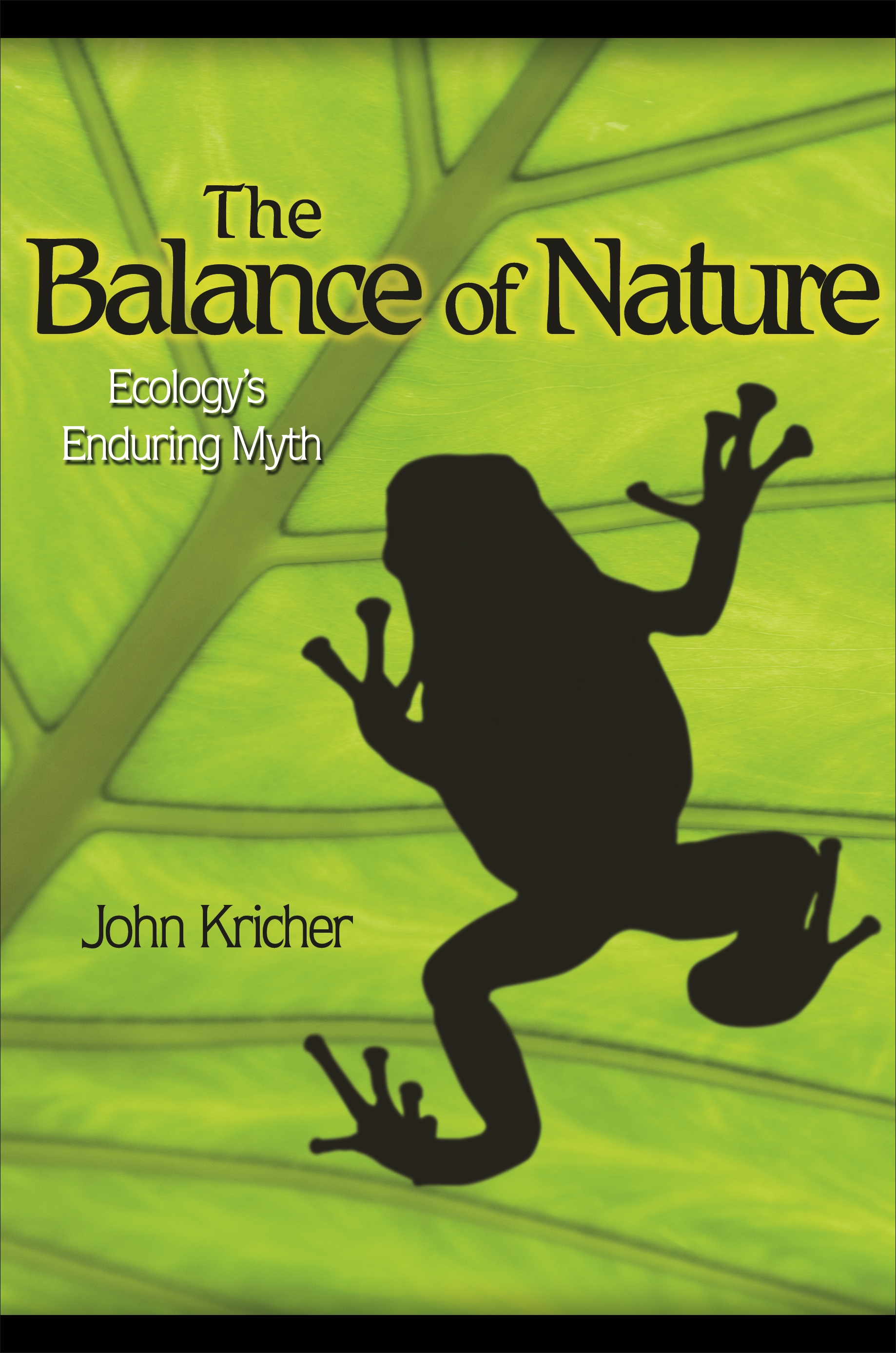
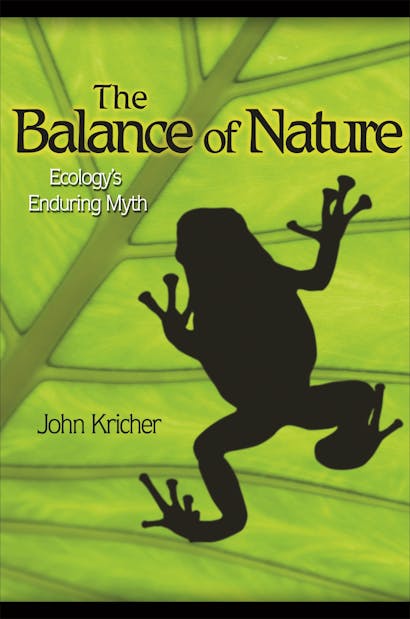
The idea of a balance of nature has been a dominant part of Western philosophy since before Aristotle, and it persists in the public imagination and even among some ecologists today. In this lively and thought-provoking book, John Kricher demonstrates that nature in fact is not in balance, nor has it ever been at any stage in Earth’s history. He explains how and why this notion of a natural world in balance has endured for so long, and he shows why, in these times of extraordinary human influence on the planet’s ecosystems, it is critical that we accept and understand that evolution is a fact of life, and that ecology is far more dynamic than we ever imagined.
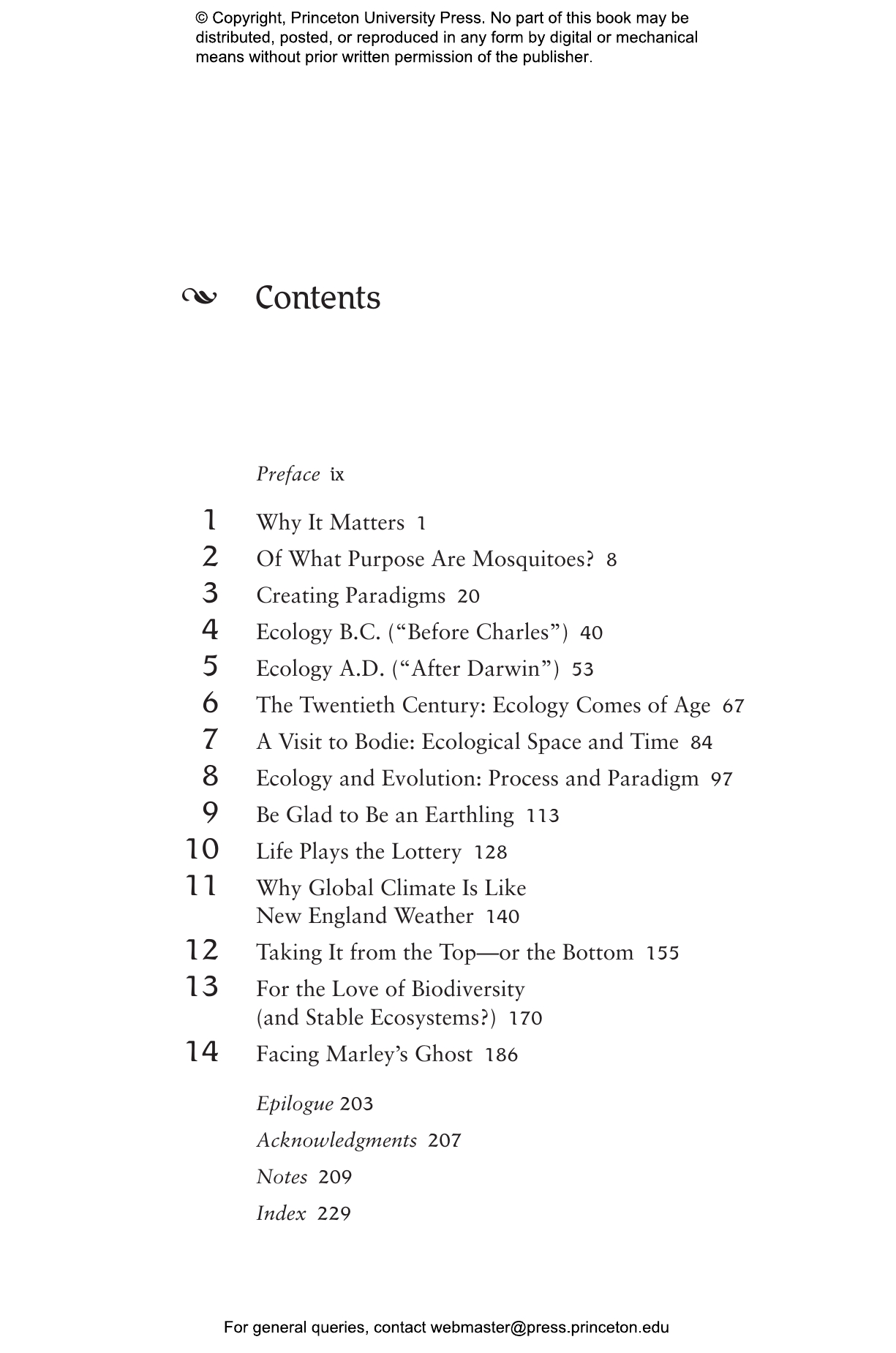
The Balance of Nature traces the fascinating history of the science of ecology and evolutionary biology, from the discipline’s early innovators to the advent of Darwin and evolution, to the brilliant and inquisitive scientific minds of today. Blending insights and entertaining stories from his own remarkable life in science, Kricher reveals how evolution is a powerful engine that drives ecological change, how nature is constantly in flux and, in effect, quite naturally out of balance—and how notions to the contrary are misguided and ultimately hazardous to us all.
The Balance of Nature forcefully argues that an understanding of the dynamic nature of ecology and evolution is essential to formulating policies of environmental ethics to guide humanity toward a more responsible stewardship of our planet’s ecosystems.
"The author conveys his message in a clear writing style without using highly technical concepts or terminology."—B.R., Shmaefsky, Choice
"Kricher's book is of interest to environmental historians and historians of science not only on account of the information it contains, but also because within it there is so little of the scholarship of the history of the environmental sciences with which we, in the humanities and social sciences, are familiar."—Jane Carruthers, Environment and History
"With The Balance of Nature, John Kricher has done us the favor of producing the book our non-ecological parents should read. In a scant 200 pages of accessible prose, Kricher weaves together three themes about which any literate citizen should be aware. . . . The Balance of Nature hits its mark. Buy a copy for your parents, your students, and your children today."—Aaron M. Ellison, Ecology
"The relationship between science and non-science belief systems especially religious belief system has always been an uneasy one. Even though this book clearly sides with science in disclaiming the notion of the ‘balance of nature', it is still relevant to people who hold to the Judeo-Christian creation belief and of other religious backgrounds who are interested in the workings of the natural world."—Richard S. Mbatu, International Journal of Environmental Studies
"John Kricher masterfully describes the ancient origins of the concept of a balance of nature and its unquestioned incorporation into the thinking of many ecologists and conservationists. This concept implies an overarching purpose or design in the natural world, making it inconsistent with our understanding of how evolution works. Kricher shows that we can understand and protect natural ecosystems better by rejecting the assumption that nature is a well-designed machine and accepting the true complexity created by numerous interacting species."—Robert Askins, Connecticut College
"This is a highly readable account of ecology, rich in substance, metaphor, and examples. The author's main goal is to puncture the cozy idea that nature is in a state of balance. While the concept of balance fitted the philosophy of some of the ancient Greeks and their intellectual descendants, John Kricher explains how it has repeatedly failed the test of empirical science. Nature, he shows, is much more interesting."—Peter R. Grant, Princeton University
"A deft and inviting tour of ecology and evolution, a book of revelation about the balance of nature that really counts, namely that between ourselves and the living planet. This is an appealing read that reveals the most important story of human history."—Thomas E. Lovejoy, president of the H. John Heinz III Center for Science, Economics, and the Environment
"Kricher's new book challenges our long-held belief in the balance of nature. Presenting fascinating evidence in a highly readable style, Kricher makes the case that no, there is no balance within nature, but yes, we need a sounder ethic that trumpets the urgency that we must save our environment—now!"—Herb Raffaele, United States Fish and Wildlife Service
"Kricher is an excellent storyteller and this is an important story to tell. I thoroughly enjoyed this little book. It is chock full of interesting ideas that challenge conventional wisdom. The Balance of Nature is a fun read throughout, and will appeal to a broad range of readers both within and outside the discipline."—Richard Karban, coauthor of How to Do Ecology
"Kricher dispels the popularly held notion that nature exists in some single, harmonious balance, and shows how, as a consequence, we need to change the way we view nature. His passion and breadth of understanding come through very clearly. The Balance of Nature is a charming and very readable book."—Oswald Schmitz, Yale University