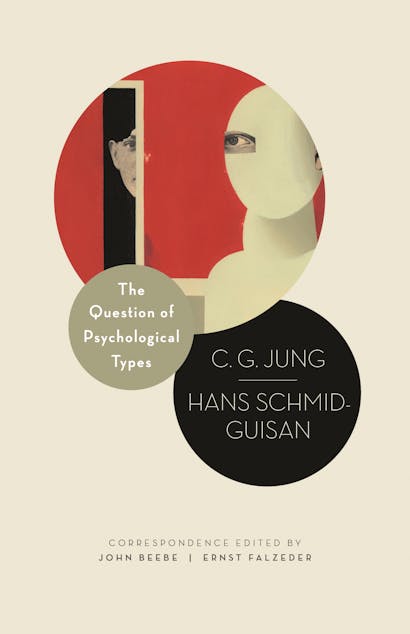
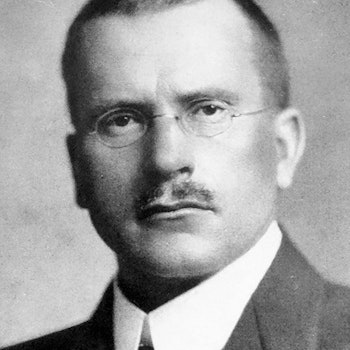
In 1915, C. G. Jung and his psychiatrist colleague, Hans Schmid-Guisan, began a correspondence through which they hoped to codify fundamental individual differences of attention and consciousness. Their ambitious dialogue, focused on the opposition of extraversion and introversion, demonstrated the difficulty of reaching a shared awareness of differences even as it introduced concepts that would eventually enable Jung to create his landmark 1921 statement of the theory of psychological types. That theory, the basis of the widely used Myers-Briggs Type Indicator and similar personality assessment tools, continues to inform not only personality psychology but also such diverse fields as marriage and career counseling and human resource management.
This correspondence reveals Jung fielding keen theoretical challenges from one of his most sensitive and perceptive colleagues, and provides a useful historical grounding for all those who work with, or are interested in, Jungian psychology and psychological typology.
"The English text is a pleasure to read, with plenty of clarifying notes. Readers will enjoy the informality of the exchange, its intellectual depth, and the humanity of Jung and Schmid-Guisan. This important addition to the history of modern psychology will engage and inform interested nonspecialists."—E. James Lieberman, Library Journal
"The Question of Psychological Types is a welcome addition to anyone who would seek to understand the framework of psychological types better in its philosophical and historical context. The publishers have done a good job of putting the book into a good, clean format and have equipped the text with a generous, even lavish, amount of footnotes. Readers who will want to know more about the practical application of typology and the types will not find much to interest them here, but to readers who want to be acquainted with the historical process that spawned Psychological Types, this volume is quite simply a mandatory read."—Celebrity Types
"Beebe and Falzeder provide a fascinating, scientifically important look into the development of Jung's seminal work on psychological types. Unlike works that stress how one can understand the typology and the implications of being a 'certain type,' this volume illuminates the early development, discussion, and refinement of the ideas. . . . A must-read for scholars and enthusiasts of Jung and an excellent 'reader' for understanding the scientific enterprise prior to the development print and online journals and formal review procedures."—Choice
"We now have the opportunity to read and study this very significant correspondence with the addition of the excellent introduction and annotations which the co-editors have produced and have our knowledge and understanding of Jung's psychological types greatly deepened, expanded and enriched."—Peter Kenney, Journal of Analytical Psychology
"The letters themselves have been brilliantly edited with very helpful annotations that provide for the reader some greater insight into the detailed arguments and allusions contained in this correspondence."—Peter Kenney, Journal of Analytical Psychology
"For nearly a century, analytical psychologists have been using Jung's typology without knowing precisely how it came into being. Reading this correspondence one finds oneself eavesdropping on the process of formulation. It is as if one can hear Jung thinking aloud as he develops seminal concepts—extraversion and introversion, the use of thinking and feeling, sensation and intuition—as superior and inferior, conscious and unconscious functions. In this beautifully edited publication, Beebe and Falzeder have made a valuable contribution to Jungian studies."—Anthony Stevens, author of Jung: A Very Short Introduction
"This correspondence between Jung and Schmid-Guisan permits us a lively aperture into the birth and formation of a psychological theory which has enormous implications for understanding human conflict. Each man, seeking the truth of typology, argues from his own psychological bias, critiques the other, and still remains trapped within his subjective limits. Yet from their cordial but nearly fractious contretemps emerges a more evolved explanation of the epistemological frame through which we all construe our world."—James Hollis, vice president emeritus, Philemon Foundation
"Jung's most important contribution to psychology is his typology based on the ideas of introversion and extraversion. These letters constitute a stunning look into the development of this major conceptual scheme in the history of psychology."—John Burnham, Ohio State University
"This collection of letters is important precisely because they were preparatory to Jung's later work. The letters show his process of thinking and are informed, literate, and expressive. The book''s editors know their subject well and their scholarship is sound."—Geoffrey Cocks, Albion College